Designing Tag for Montreal's Underground City
We played Tag in Montreal’s Underground City
Introduction
Tag is the ultimate playground game. When we started designing city-wide party games, we knew tag would need to happen. We’re Outside: The Game, and today we’re going to tell you how we designed a game of tag for Montreal’s Underground City. This post is about the design process - you can read the final game rules here.
The Underground City
Montreal’s Underground City is a sprawling maze of tunnels, trains and shopping malls. Built to enable downtown exploration in the freezing Canadian winter, this warren of tunnels was connected by corporations and governments with no overall plan. The result is a confusing, strangely liminal space full of dead ends, loops, and surprising connections. There’s a United Nations building, an ice-skating rink, and a piece of the Berlin wall. It’s also where that one scene from John Wick 2 was filmed.
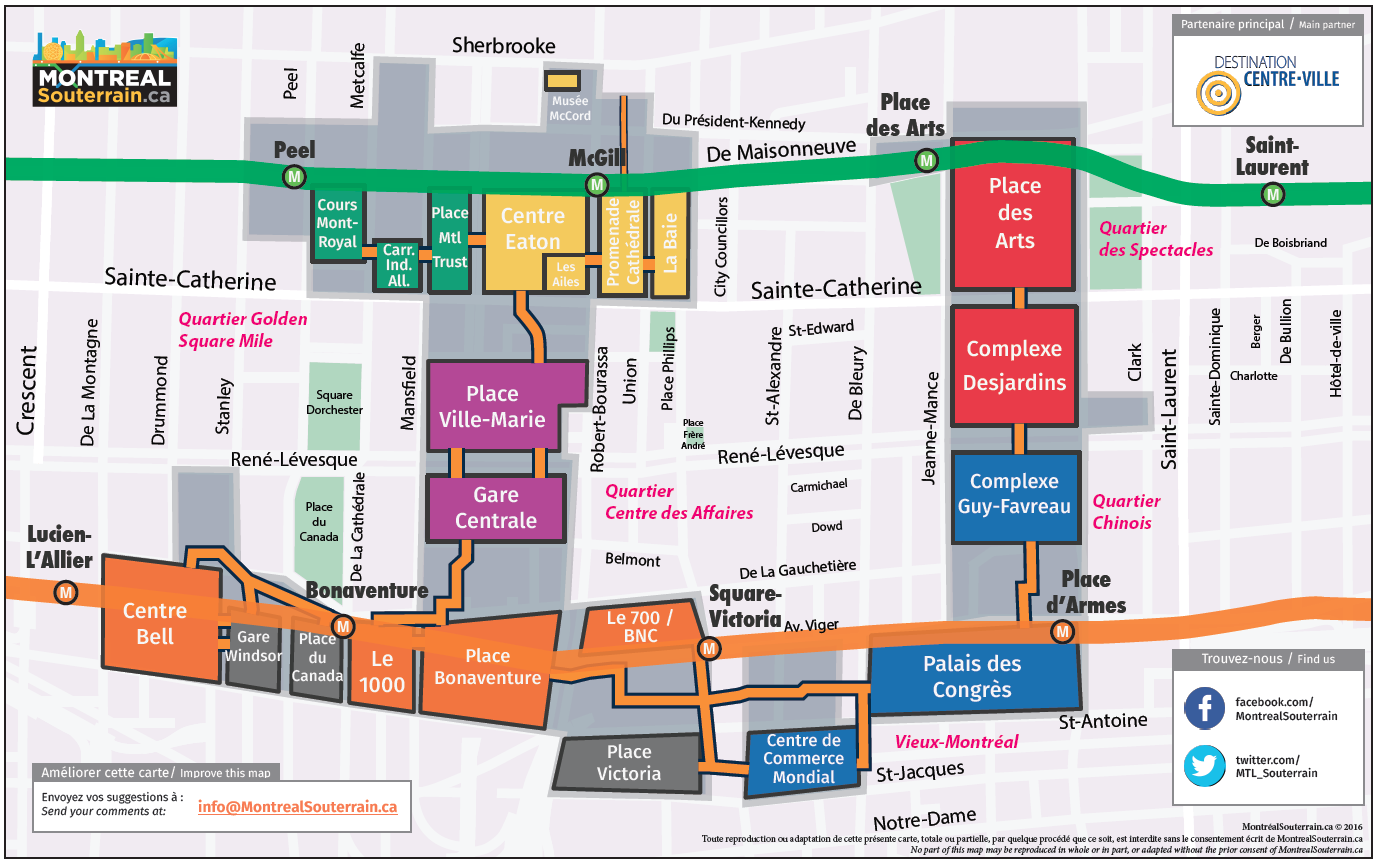
We knew we wanted to use this unique environment for a game, thought this was the perfect setting for tag - it’s confined enough that it’s hard for people to just run away, but complex enough that you can avoid people and create interesting obstacles.
First, we looked at the layout of the underground city. We walked through the tunnels to learn how they work, and inspire gameplay ideas. Here’s what we found.
We made a few realisations from this:
-
The two metro lines (orange and green) can be used to “hop” between areas, potentially allowing chasers to cut off runners, or runners to escape.
-
There are a bunch of choke-point tunnels. We could “block” these with challenges or conditions, to slow people down.
-
The underground city has lots of malls, abandoned areas, historical curiosities and art installations. The game should encourage exploring those, through challenges or bonuses.
Making Tag into a real game
The first step in our design process is always to ask:
What is fun about this game?
To make this game work for adults, in a larger setting, we’ll need to transform the game, and we want to be sure we’re preserving the fun parts.
Here’s what we came up with for tag.
Tag is fun when…
-
You surprise someone by appearing near to them.
-
You are almost caught, but then you escape.
-
You get away or catch someone by thinking fast and using your environment.
-
There’s a constant change of who is chasing and who is running.
Design Pillars
Now we have our north star of fun, we set some basic practical rules to guide the design:
-
The game would take place entirely in the Underground City.
-
Players would be in teams of at least 2 – this makes it more fun and easier to manage the information.
-
All teams will have their location shared on Google Maps. This is the only way it’s possible to find anyone in the labyrinth.
-
Two teams will be “it” at the same time, to create more strategic complexity.
This last condition came as a result of some early playtesting - with only one chasing team, you can effectively remove yourself from the gameplay area by going to the other side of the city. Also, only one chasing team creates very linear and predictable movement.
With our practical scope and guiding principles in place, we moved on to transforming the game of tag.
How do you win at tag?
When you play tag at school, the game just keeps going until the bell rings and you go back to class. Nobody wins, it’s just fun to run around.
That setup makes sense for a playground game. But, this game is for adults who are committing a lot of time, and want some structure to why they are playing. We need a victory condition. So we asked our next design question:
What does it mean to “win” at tag?
We considered the following ideas:
-
You win if you’re not “it” at the end. This is the most intuitive and direct link to the playground game.
-
You win if you complete some other kind of victory condition, like doing challenges, which you can only do while not “it”.
-
You win if you spend the least amount of time “it”.
The first idea is simple, but feels arbitrary, and having one team lose while every other team wins does not feel fun.
We spent a long time on the idea of a separate victory condition, but every version of this feels like a separate game with a “tag” mechanic awkwardly added. It doesn’t feel like tag any more.
The third felt the most like a real game of tag. Your main goal at any time is not to be “it”.,
However, this idea created a new problem. If you just award points based on time spent not it, the outcome of the game could theoretically become obvious around halfway into the play time.
Solution: Steal points on tag
We solved this problem with a kind of weird scoring system.
First, teams get some points every 15 minutes if they are not “it”. This is the basic incentive to avoid being tagged, or to tag another team quickly.
Second, when you tag another team, you steal one quarter of their points.
Here’s what this means:
-
Every team can win or lose, even in the final moments of the game.
-
It builds in an attack-the-winner incentive. If one team hasn’t been tagged for a while, they’re a juicy target for the chasers - this encourages our “everyone switches roles” condition.
How to stop everyone from being boring
Our next problem was how to stop players from optimizing the fun out of the game.
When you play tag as a kid, everyone kind of hangs around waiting for the chaser, because it’s fun to run away. Plus, you’re in a small area and can probably see everyone.
If you’re an adult playing tag strategically, over an entire city, the optimal strategic move is to get as far away as possible and hide.
This runs counter to the design intention of exploring the underground city, and doesn’t feel like “tag”.
We couldn’t find a silver bullet for this, but we came up with a few methods to push players off this course:
No tag backs
When you get tagged, you can’t tag back the team that tagged you. This means the game can never be too disconnected. If you’re way away from the main gameplay, and you get tagged, you have to go a long way to find another team. This combined with the point stealing means hiding yourself far away to hoard points can be a very bad idea.
Exploring Bonus
To explicitly encourage movement, we added a point bonus for each region of the underground city visited - plus a major bonus if you complete a full loop of the main tunnel circuit. These points apply at the end of the game, so they can’t be stolen.
Chaser powers
We already knew we wanted to give the chasers some power-ups to make catching teams easy. To discourage hiding, we added powers that let the chasers “smoke out” a region of the board, forcing players to leave or be tagged. This makes hiding ineffective - the only way to survive is to be mobile.
Playtesting
We ran multiple simulations of the game using Street View and maps, pretending to be multiple teams. Some things we finalised in these simulations included:
-
Which power-ups to have - like turning off their tracker or taking a metro one stop.
-
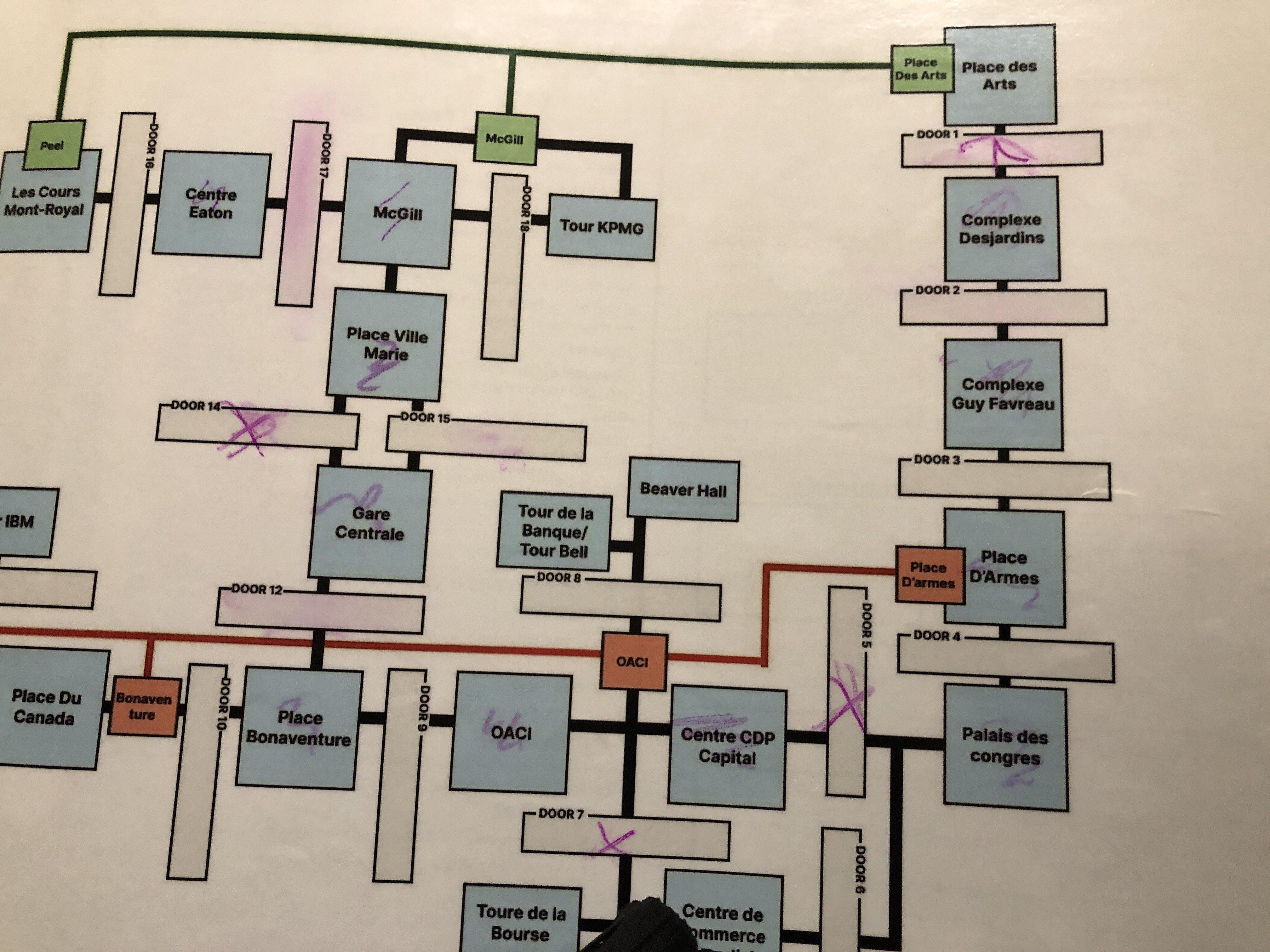
The game should start with “locked doors” confining the game to a specific area, then, as teams earn power-ups, they can open these doors and widen the game area.
-
Chaser abilities should get stronger the longer they are “it”. This avoids anyone being “it” for a really long time.
Final Game Playtest
Here is the final rules document.
We created and laminated copies of the game board where players can track which doors are barred and which zones they have visited.
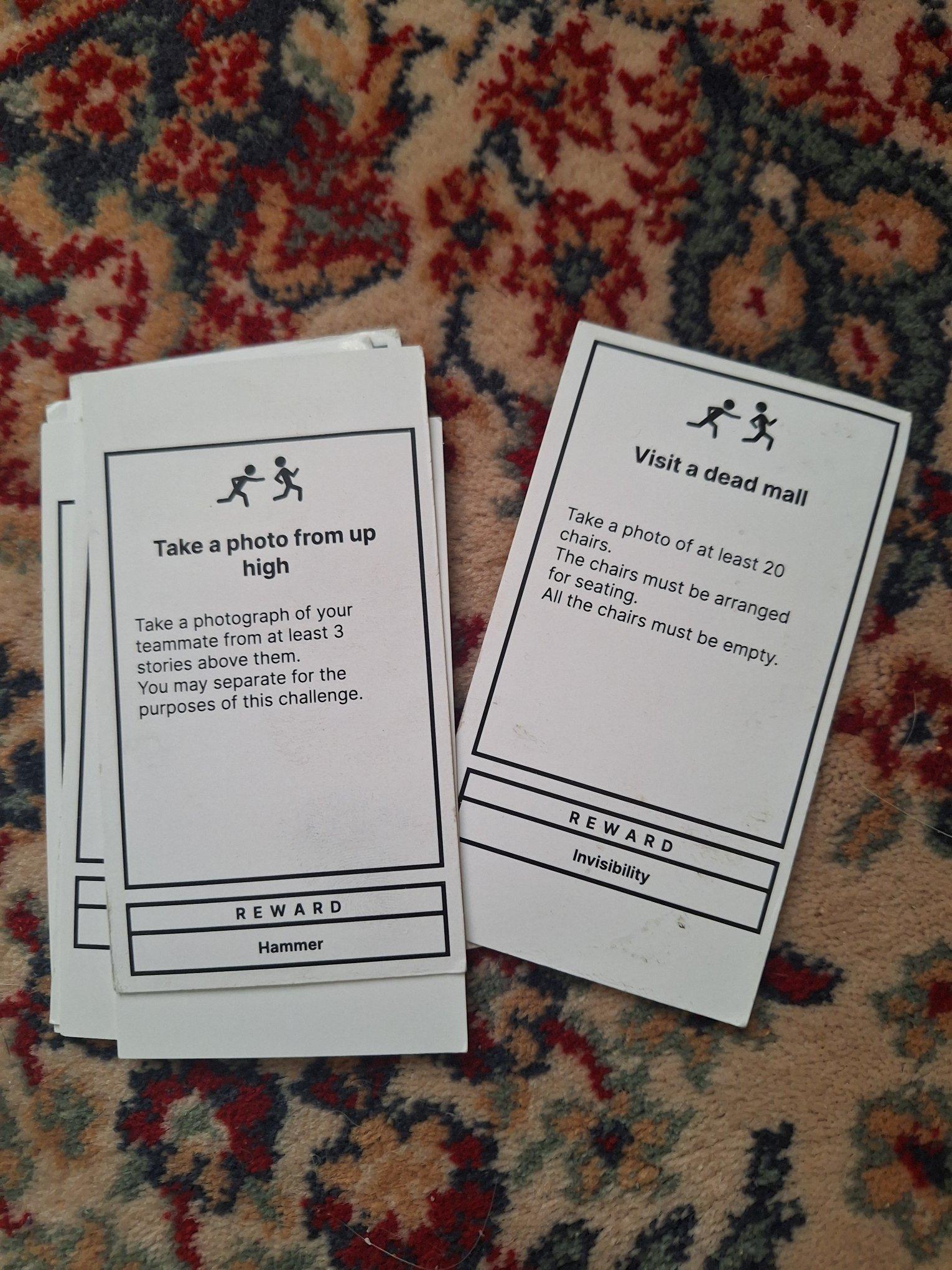
We also designed and printed physical cards for the challenges and power-ups.
We ran the game on a Saturday afternoon over 4 hours, with 18 people split between 7 teams.
Overall: Huge success! The game was fast-paced and dynamic with lots of crazy twists and turns.
Lessons Learned
Of course, the game was not perfect! Some lessons for next time:
-
Teams with 3 people had a much easier time. The information management became overwhelming for teams of 2.
-
The doors were ultimately less impactful than expected. We should make it much easier to access the doors and harder to remove them.
-
The chaser power-ups worked very well. One team was “it” for an entire hour, which meant they got the “death zone” power-up that let them tag any team in the same zone, which helped get them back in the game.
Playtest Album
Spot Yourself on a Map
Find a physical map which includes your current location.
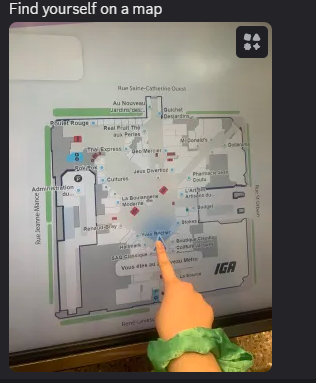
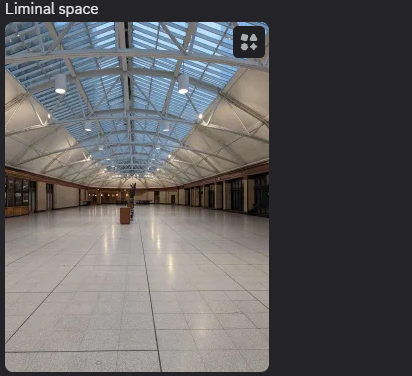
Liminal Space challenge
Challenge: “Find a public space with chairs and tables but no people”
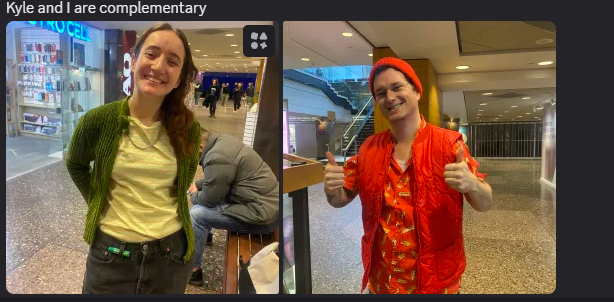
Become Complementary challenge
Challenge: Dress in majority complementary colors
Getting tagged
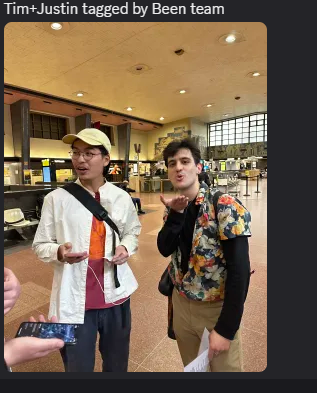
Tim and Justin get tagged! They went on to win the game, though.